
In this article, you’ll learn how to connect timeBuzzer with FastBill to automate invoicing.

Connect timeBuzzer to FastBill #
- Log in to the timeBuzzer web console.
- Open the Settings.
- Select Integrations.
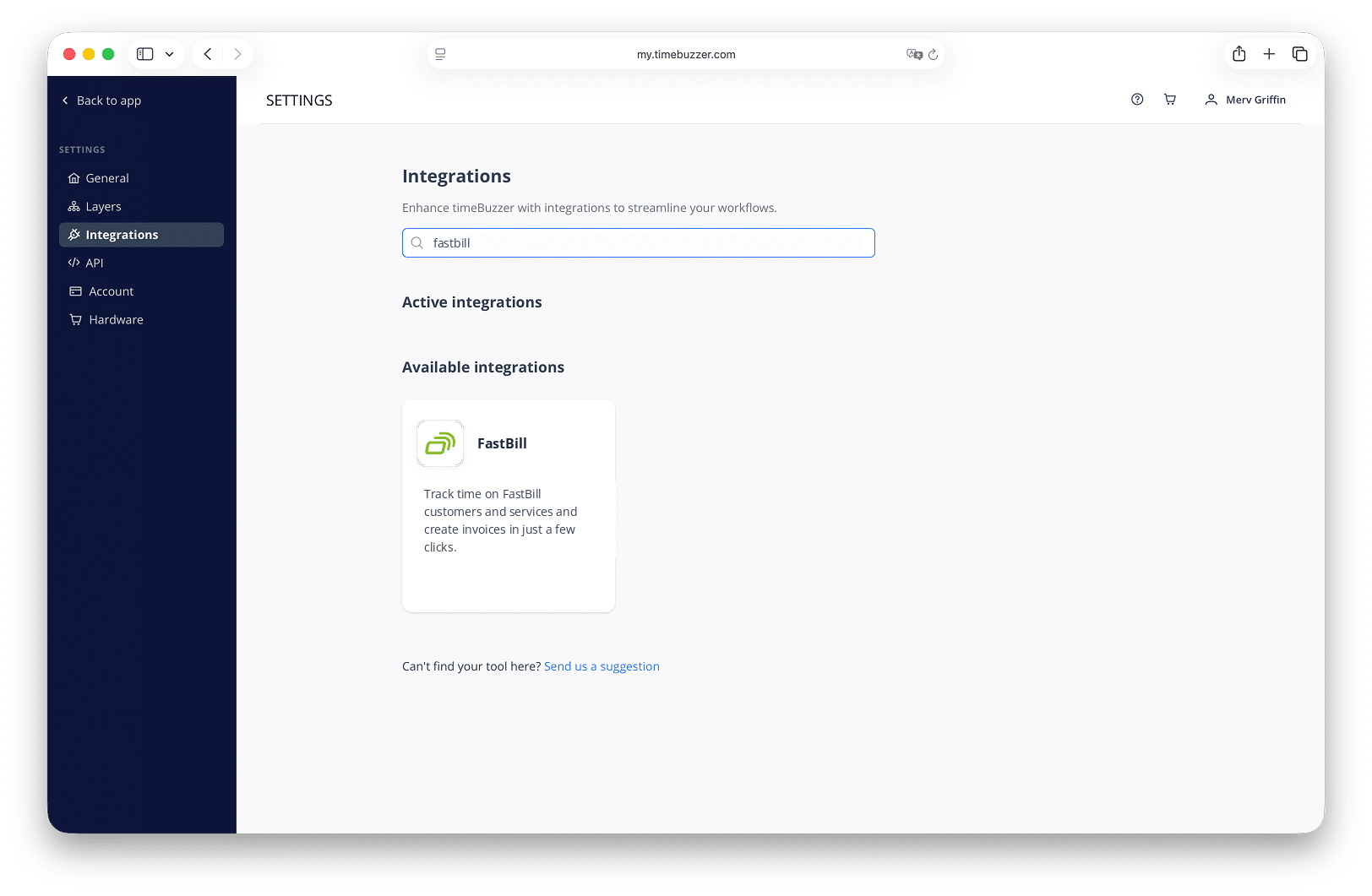
- Search for FastBill in the list and click Connect.
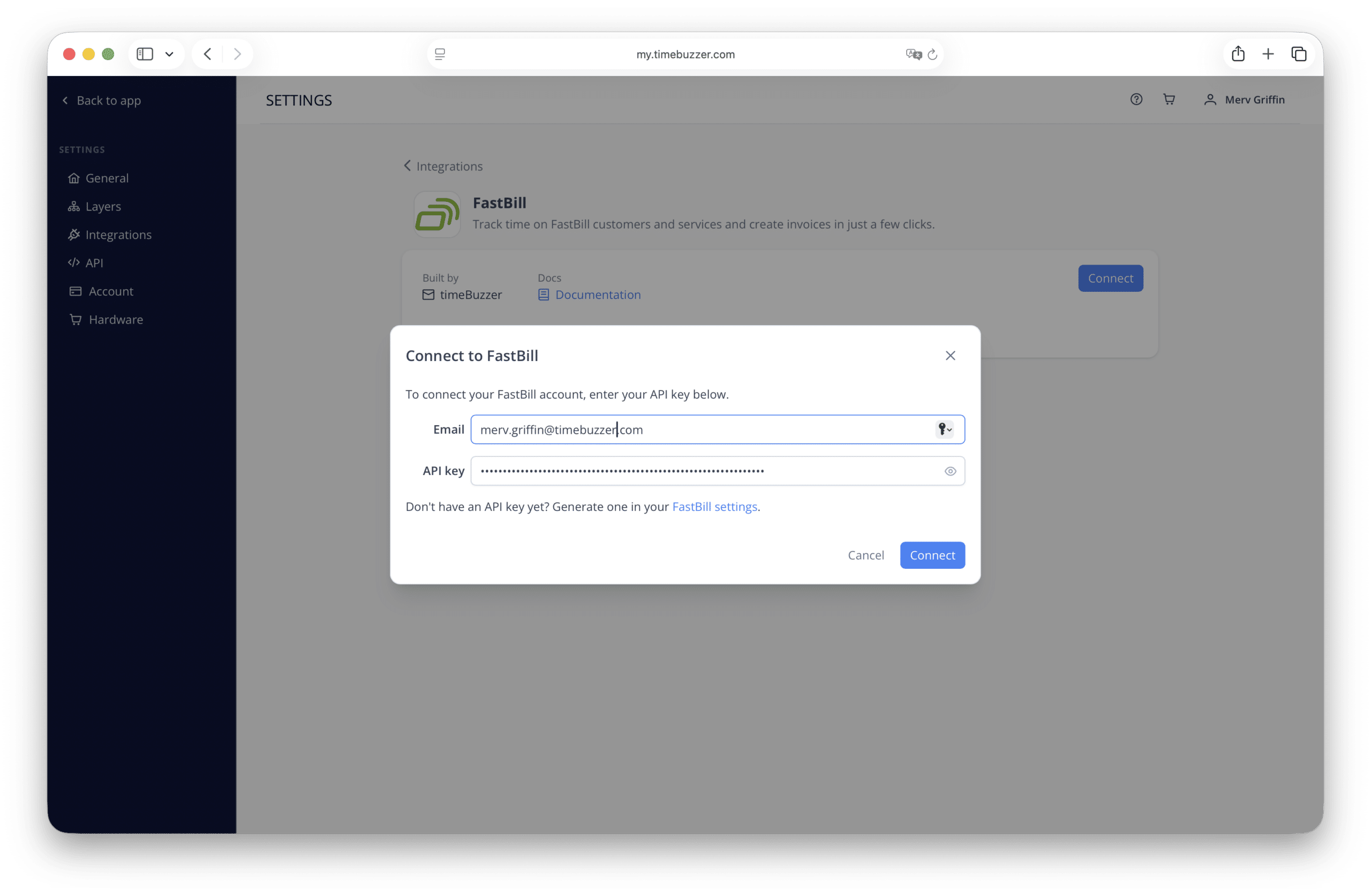
- Enter your FastBill Email and API key (If you don’t have an FastBill API key yet, you can generate one in your FastBill settings.)
- Click Connect.
Your timeBuzzer account is now connected to FastBill!
Importing customers from FastBill #
You can import FastBill customers into any timeBuzzer layer.
- Go to the layer to which you want to import customers.
- Click on Import.
- Select FastBill → Customers.
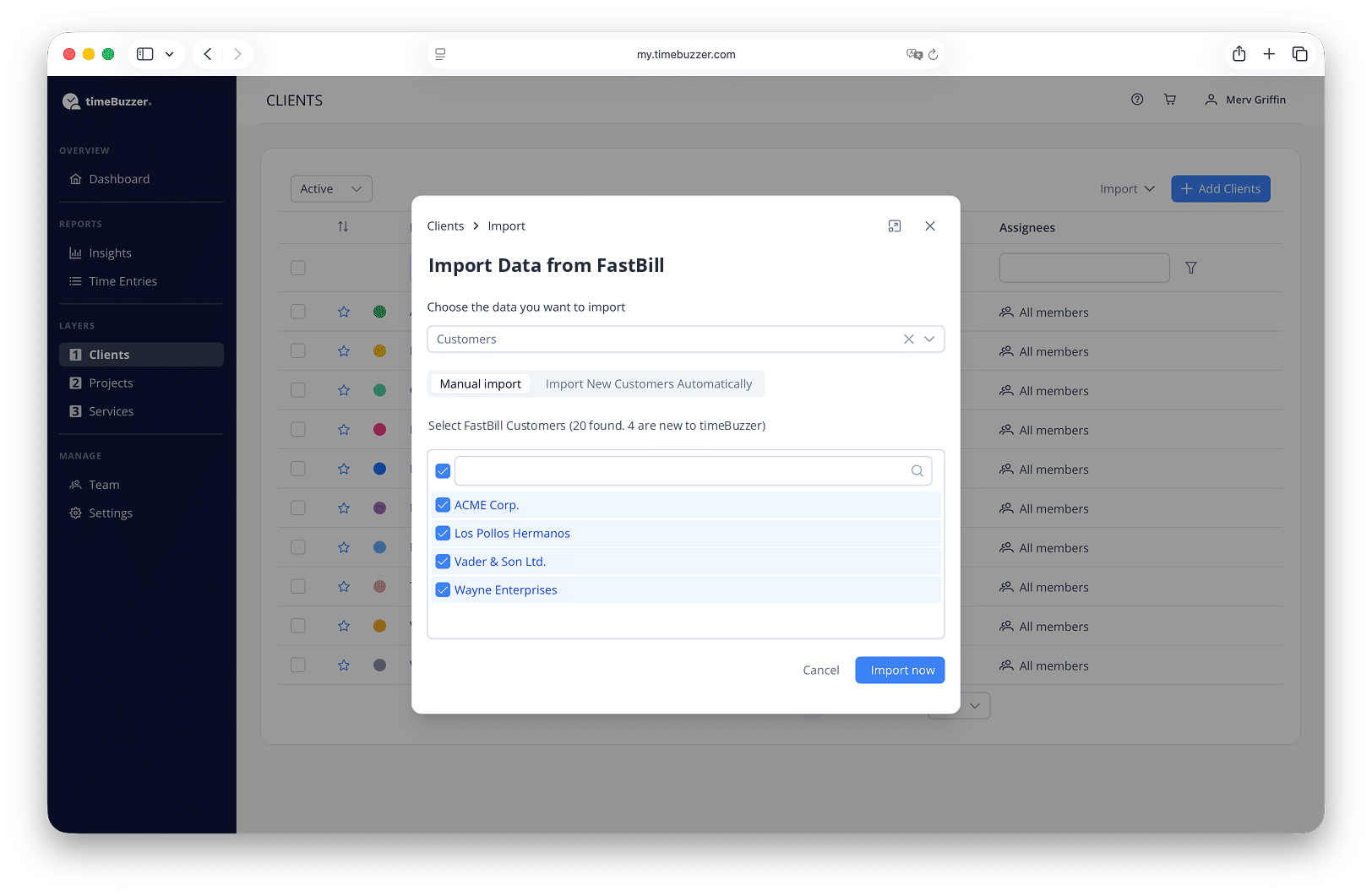
- Select the customers you want to import.
- Only new customers that do not yet exist in timeBuzzer are displayed. The system checks whether there are already customers with the identical name.
- Click on Import.
- Done. The imported customers will appear in your list with an external link that takes you directly to the respective customer in FastBill.
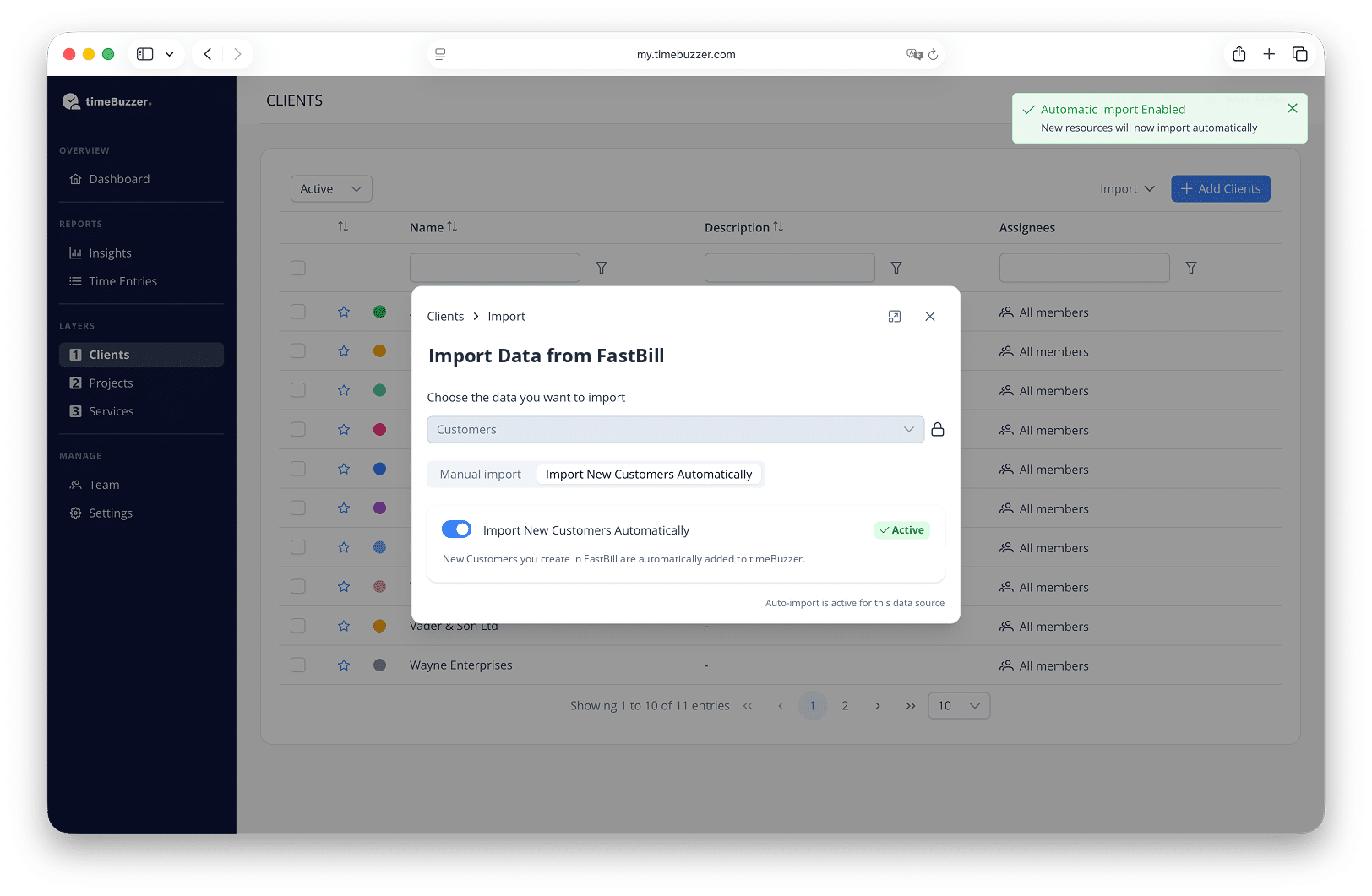
You can also enable automatic import, to automatically add new customers as they’re created in FastBill.
- Click on Import New Customers Automatically.
- Enable Automatic Import.
Import services from FastBill #
You can also import FastBill services into any timeBuzzer layer.
- Click on the layer into which you want to import services.
- Click on Import.
- Select FastBill → Services.
- Select the services you want to import.
- Note: Only new services that do not yet exist in timeBuzzer are displayed. The system checks whether services with identical names already exist.
- Click on Import.
- Done. The imported services will appear in your list with an external link that takes you directly to the respective service in FastBill.
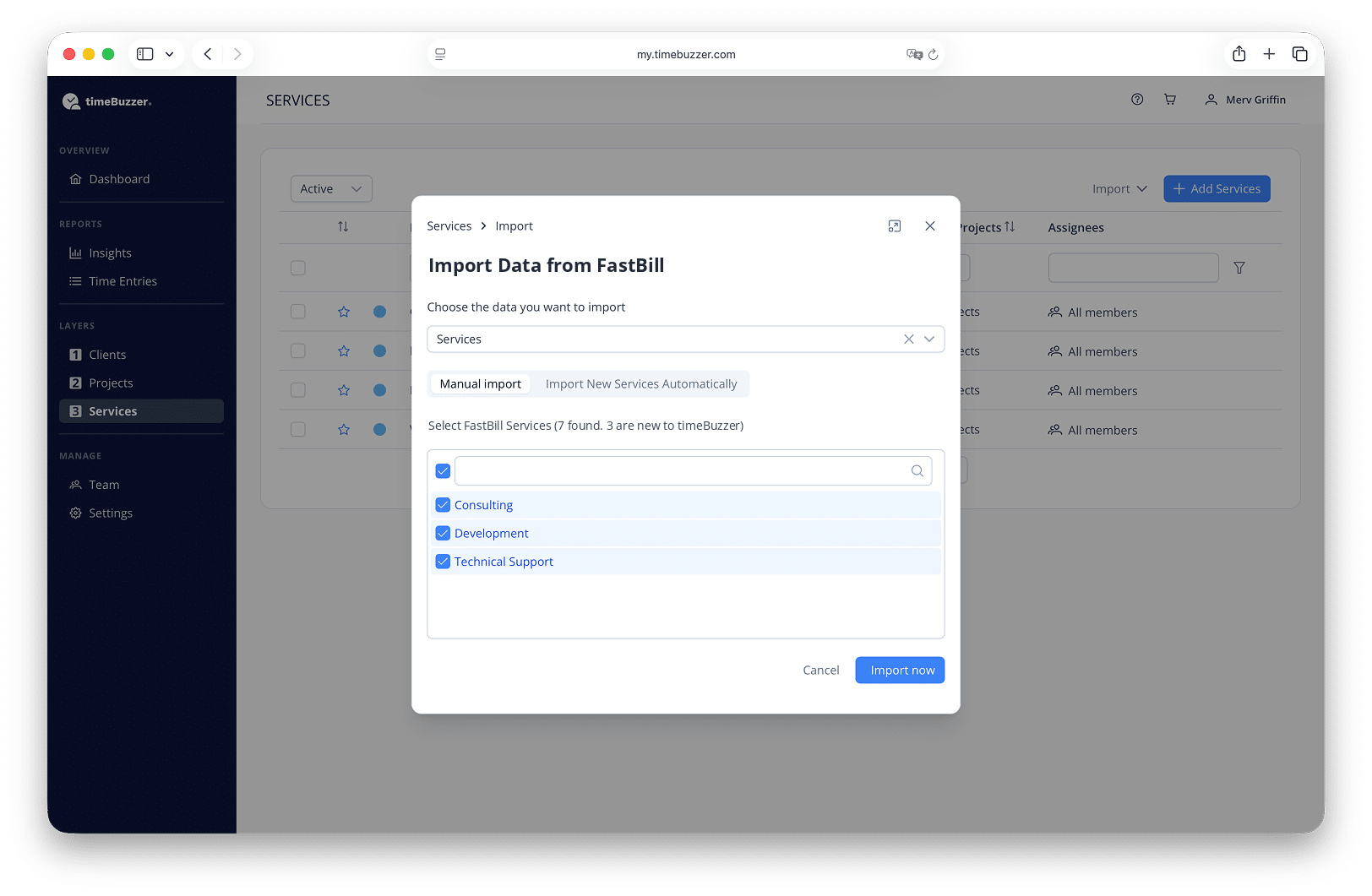
You can also enable automatic import, to automatically add new services as they’re created in FastBill.
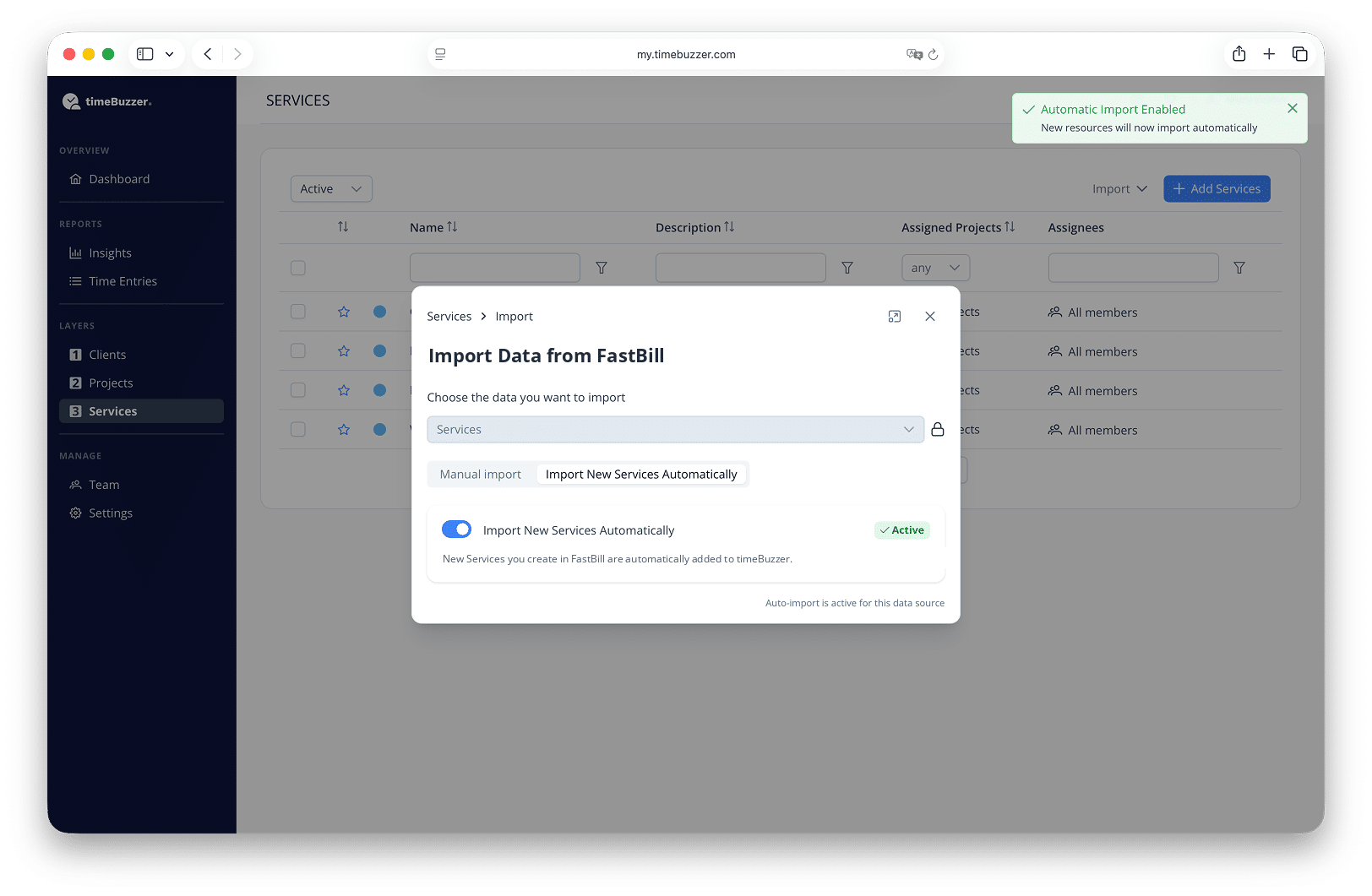
- Click on Import New Services Automatically.
- Enable Automatic Import.
Create FastBill invoices directly in timeBuzzer #
- Go to Time Entries in timeBuzzer.
- Select the time period for your invoice (this defines the service period).
- Apply filters or select specific time entries.
- (Optional) Activate time rounding if you want to round time entries for the invoice.
- Click on Export.
- Select FastBill as the export option.
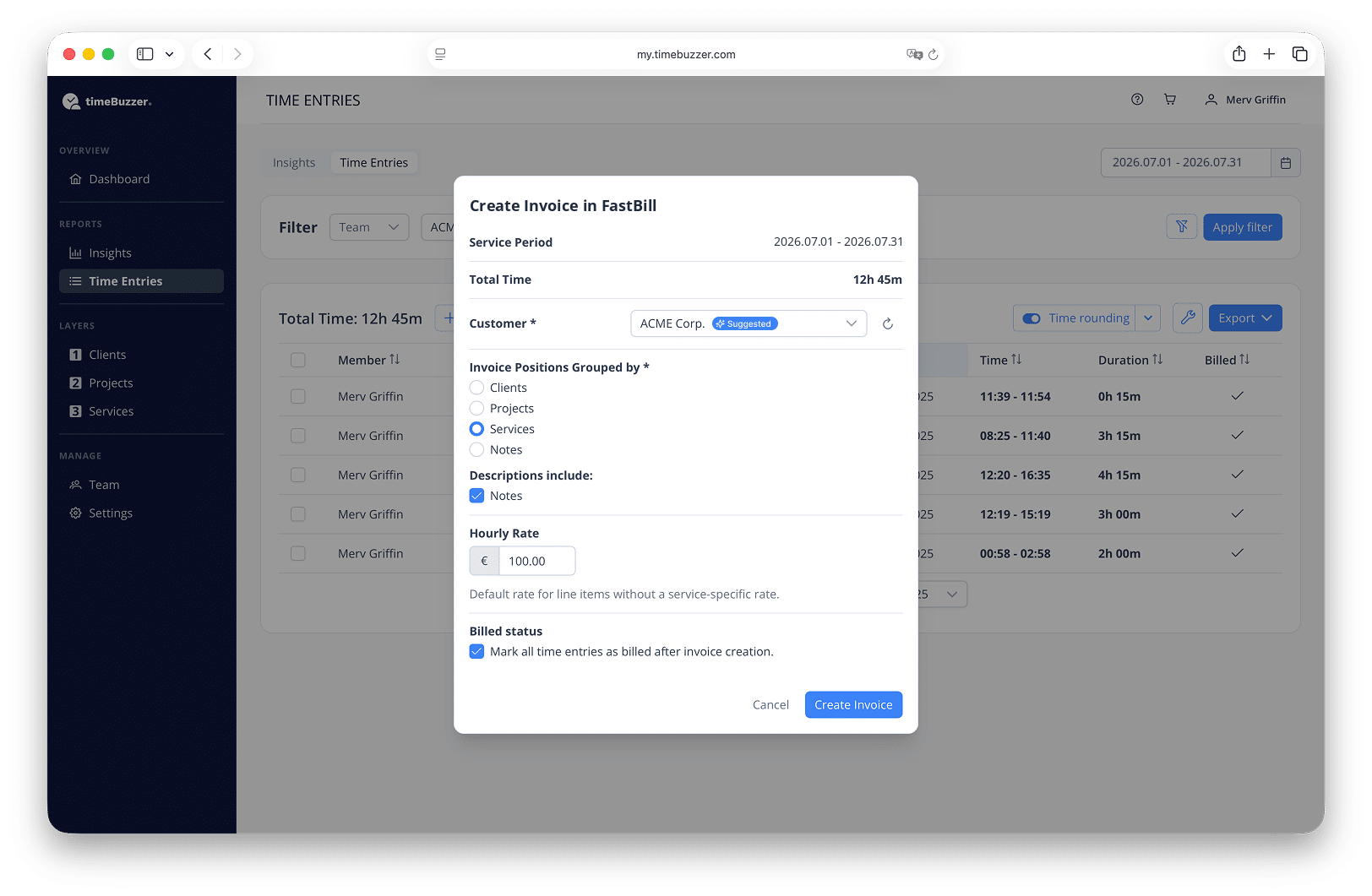
- Continue with the suggested contact based on your filters or manually select your FastBill customer to create an invoice for. The contact must have an address in order to create an invoice for it.
- Select how the time entries should be grouped (by layers or notes).
- (Optional) Transfer notes from the time entries to the invoice description. Identical notes are combined.
- (Optional) Set the default hourly rate.
- Note: If you have hourly rates defined for your services in your accounting tool and you group by the layer in which you have imported that services, those hourly rates, currencies, taxes and units will be automatically applied.
- (Optional) Activate Mark as billed to automatically mark time entries after the invoice has been created.
- Click on Create invoice.
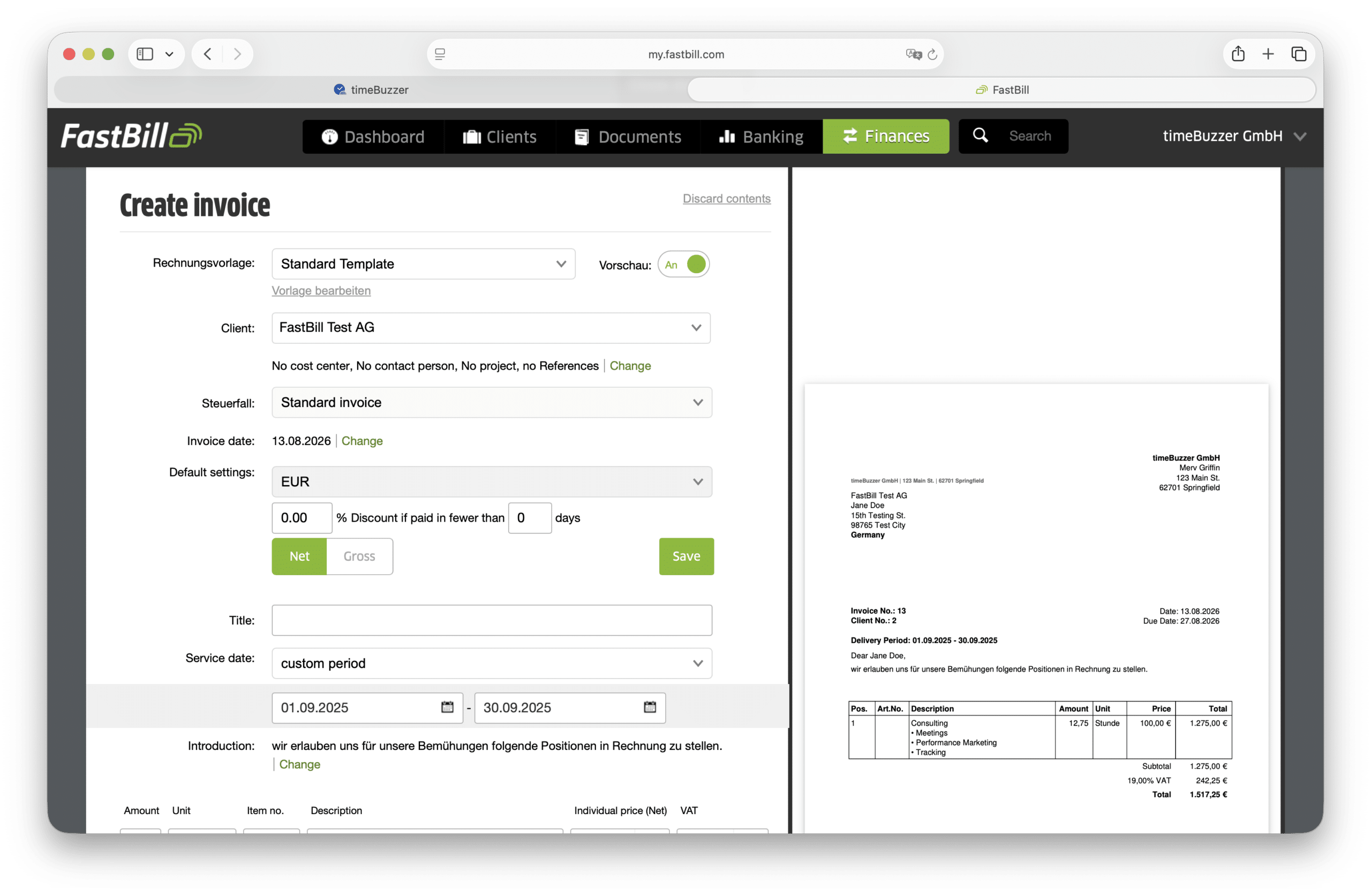
- Select Show invoice to open it in FastBill (opens in a new tab).
- Check and edit your pre-filled invoice.
- Click Create invoice.
- Done!
Define custom billing units #
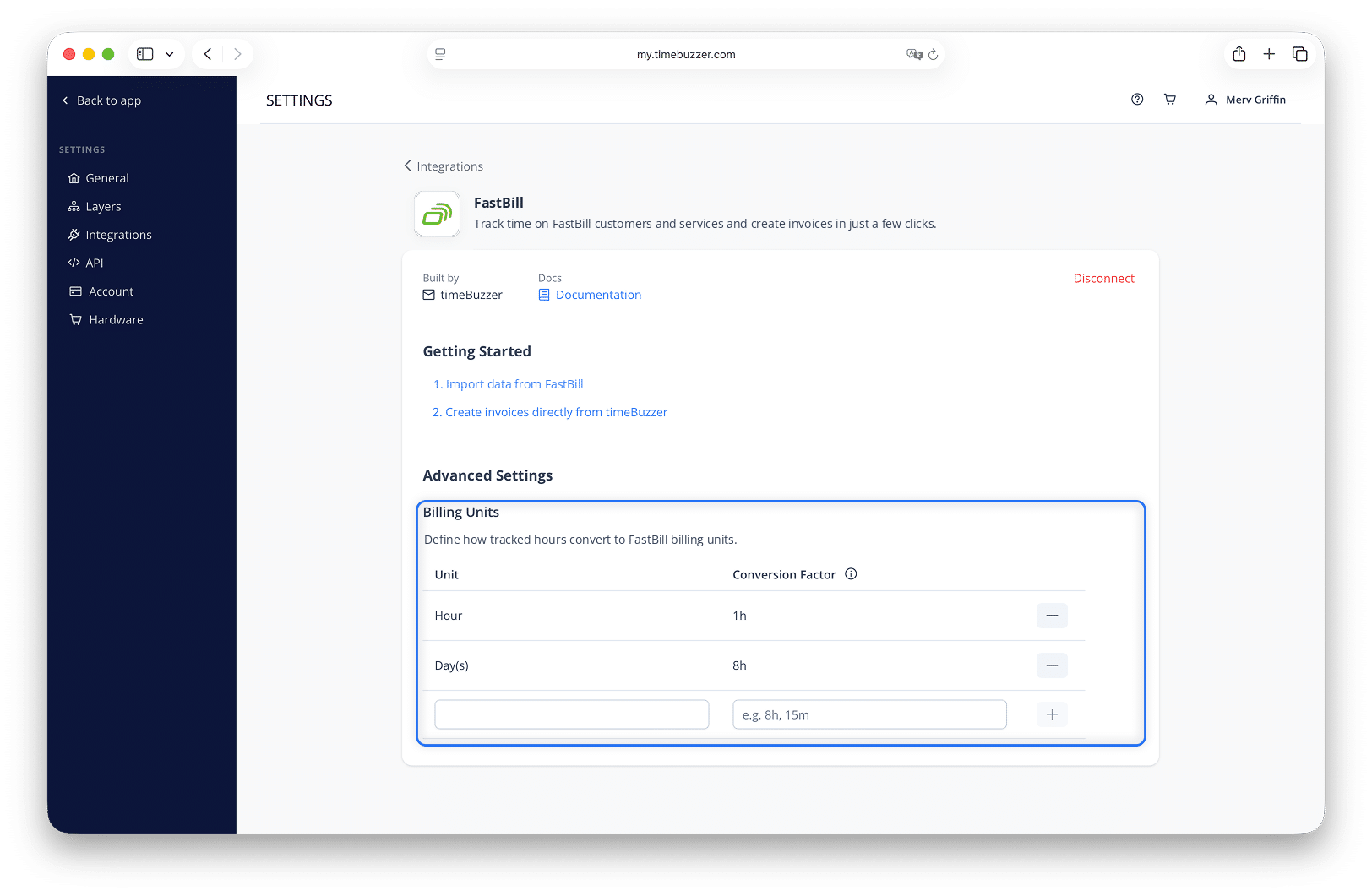
timeBuzzer tracks time in hours. If you bill some services differently in FastBill, add a custom unit with a conversion factor.
Examples:
- You bill a service by the day. Add the unit “Day(s)” with a conversion factor of 8h.
- You bill in 15-minute increments. Add the unit “Work unit” with a conversion factor of 15m.
timeBuzzer converts your tracked hours automatically when you create an invoice.
Requirements:
- The unit must also exist in FastBill.
- You need to use services in FastBill, and import and connect them in timeBuzzer.
- When generating the invoice in timeBuzzer, group by “services”.
You can set different units for different services.
FAQ #
What do I need to use the integration?
You need a timeBuzzer Pro account and a FastBill account with a plan that supports partner integrations and writing invoices.
Which layer structure in timeBuzzer is recommended?
As FastBill is structered in contacts and services, we usually recommend to use two layers with “contacts” in the first and “services” in the second layer.
However, generally you can import both customers and services into any layer. This allows you to tailor the integration perfectly to your individual structure.
Can I invoice FastBill customers without importing them?
Yes. Import and export work independently, so you can invoice FastBill customers with tracked time even if you haven’t imported them into timeBuzzer.
This is useful if you don’t structure timeBuzzer by customer, for example if you only track by project. You can still assign your tracked time to a FastBill customer when creating the invoice.
How does automatic import work?
Automatic import will automatically transfer future customers or services created in FastBill to the selected layer in timeBuzzer.
If you want to import existing customers and services, you can do so using the manual import function.
Who can use the integration?
Only users with the Administrator role can create FastBill invoices or import FastBill customers and services in timeBuzzer. Managers and regular users do not have access to these functions.
Which contacts are imported?
All contacts in FastBill that are marked as Customer or Customer / Supplier are available for import into timeBuzzer. Contacts that are marked exclusively as Supplier are not transferred.
The import of collective customers is currently not supported.
Which article types are imported?
All articles in FastBill that are marked as service are available for import into timeBuzzer.
Hourly rates, currency, taxes, and units are automatically applied to the invoice line items as defined in FastBill.